.png)
The Great Tomato Chase: Making Sense of the Tomato Crop Season
- dev1digitalblast
- Apr 30
- 8 min read

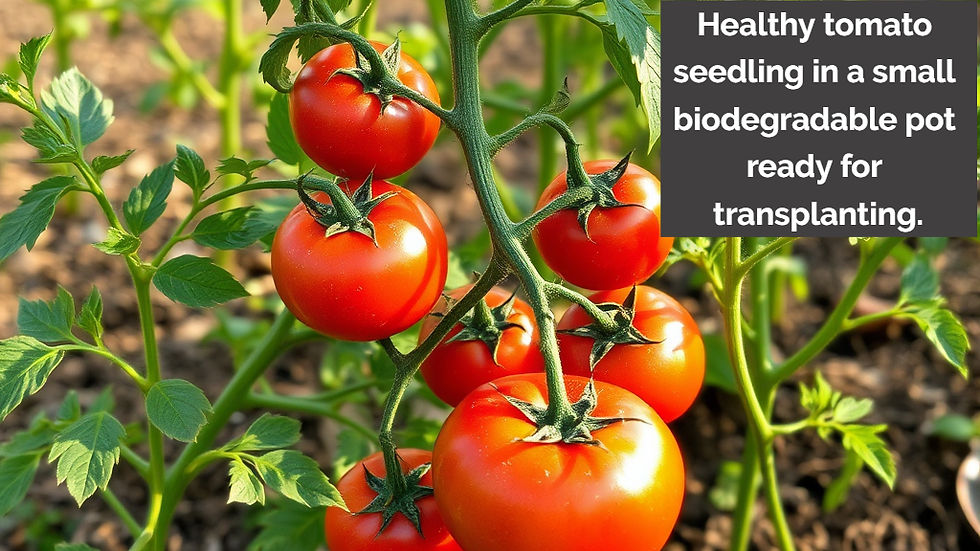
There is nothing quite like the smell of a tomato plant. You know the one....that earthy, spicy, green scent that rubs off on your fingers when
you brush against the leaves. It’s the smell of summer. It’s the smell of hope.
But let’s be honest for a second. If you’ve ever stood in your backyard staring at a sad, wilted stick that was supposed to be a "prolific producer," you know that gardening isn't always a walk in the park. It’s more like a chaotic dance with nature where nature occasionally decides to step on your toes.
We’ve all been there. You see those beautiful tomato seedlings at the local nursery in August and think, "Yes! I’m getting a head start!" Then, two weeks later, a late frost turns your dreams into mush. Or maybe you’re in Melbourne, wondering why your neighbor’s plants look like a jungle while yours look like they’re auditioning for a role in a desert movie.
Whether you’re growing Roma tomatoes for the world’s best pasta sauce or just trying to figure out how big do tomato plants grow so they don’t take over your entire patio, I’ve got you. We’re going to walk through the "when," the "where," and the "oh no, why is it dying?" of the tomato crop season. Put the kettle on. Let's chat.
Timing is Everything: When to Plant Tomatoes
In Australia, timing isn’t just a suggestion; it’s the law of the land. If you get the best time to plant tomatoes wrong, you’re fighting an uphill battle from day one. I remember my first year in Victoria, I was so eager. I planted in September because the sun came out for exactly two hours. Big mistake. The ground was still like an ice cube.
The "Too Early" Heartbreak
This usually happens because we get a single warm day and lose our minds. We rush to the garden center, grab the biggest tomato seedling we can find, and plonk it in the ground. Then, the overnight temperature drops to 5°C.
Why does this happen? Well, tomatoes are tropical at heart. They’re like that one friend who refuses to go out if there’s a breeze. When the soil is too cold, the roots just... stop. They sit there, shivering, unable to take up nutrients. It’s incredibly frustrating to watch a plant stay the exact same size for three weeks while you wonder what you did wrong.
The Melbourne Confusion
If you're asking when to grow tomatoes in Melbourne, you're probably used to the "four seasons in one day" trope. It’s real, and it’s a nightmare for tomatoes. Most locals will tell you to wait until Melbourne Cup Day in November.
This happens because the Victorian climate is notoriously fickle. You think you’re safe, and then a cold southerly wind sweeps in. Planting too early in Melbourne often results in "damping off," where the stem rots at the base because it's too damp and chilly. It feels like a personal insult when a plant you've coddled just falls over and dies.
The Perth Heatwave Struggle
Now, if you’re looking at when to plant tomatoes in Perth, you have the opposite problem. You aren't worried about frost; you're worried about the sun turning your plants into sun-dried tomatoes while they’re still on the vine.
In Perth, if you wait too long to plant (say, late November), the plants hit that scorching December heat before they’ve built a solid root system. The flowers drop off because the pollen becomes sterile in high heat. You end up with a beautiful green bush and zero fruit. It’s enough to make you want to give up and grow cacti instead.
The "Wait, Can I Grow Them in Winter?" Myth
Every year, someone asks about growing tomatoes in winter. Unless you live in the tropical north or have a very expensive heated greenhouse, the answer is usually a gentle "don't do it to yourself."
The lack of light is the real killer here. Even if you keep them warm, the winter sun is too weak. The plants grow "leggy" long, thin, and weak, stretching for light that isn't there. It’s a lot of effort for a harvest that usually tastes like watery cardboard. We’ve all tried to defy nature, but usually, nature wins this round.
Space, Growth, and the "Jungle" Effect
I remember the first time I grew an "Indeterminate" variety. I thought the tag said it grew to five feet. It grew to nine. It ate my lawn mower. Knowing how big do tomato plants grow is the difference between a tidy garden and a backyard that looks like the setting of a horror movie.
The Staking Disaster
You buy a tiny tomato seedling, put a little bamboo skewer next to it, and think, "That’ll do." Fast forward six weeks, and your plant is splaying across the ground like a tired toddler.
This happens because many varieties (especially those Roma tomatoes we love) are heavy feeders and fast growers. When the fruit starts developing, the weight is immense. If the plant touches the ground, it invites every slug and snail in the neighborhood to a buffet. It feels like you’ve failed your plant when you see those beautiful fruits rotting in the mud.
Overcrowding the Bed
We all do it. We want a huge tomato crop season, so we pack six plants into a space meant for two. "They'll be fine," we tell ourselves.
But here’s the thing: plants need to breathe. When they’re packed together, the air can’t circulate. This creates a humid microclimate, a literal sauna for fungal spores. Suddenly, you’ve got powdery mildew or early blight spreading like wildfire. It’s heartbreaking to see a whole row of plants go brown just because you wanted one extra Roma bush.
The "Leggy" Seedling Problem
Sometimes, before they even get outside, your seedlings look like long, skinny pieces of green spaghetti.
This happens because they aren't getting enough light on the windowsill. They’re literally stretching their necks out trying to find the sun. If you plant them like that, the first gust of wind will snap them. You’re left standing there with a broken stem in your hand and a lump in your throat, thinking about the weeks you spent watering them.
Containers That Are Too Small
"I'll just grow it in this cute little pot," says every beginner gardener ever.
The problem is that tomatoes have massive root systems. If the pot is too small, the soil dries out in twenty minutes. This leads to blossom end rot (that nasty black spot on the bottom of the fruit) because the plant can't move calcium around without consistent water. It’s so annoying to see a perfect-looking tomato and flip it over only to find it’s ruined.
Soil, Water, and the "Goldilocks" Zone
You can have the best time to plant tomato plants circled on your calendar in red ink, but if your soil is rubbish, your harvest will be too. Tomatoes are "heavy feeders." They’re the teenagers of the plant world—constantly hungry and prone to drama.
The Drainage Nightmare
If your garden has heavy clay, your tomatoes are basically sitting in a bathtub with no drain.
Tomatoes hate "wet feet." When the roots sit in water, they can't breathe, and they literally drown. The leaves turn yellow, and the plant looks wilted even though the soil is soaking wet. It’s incredibly confusing for a new gardener. You think, "It looks thirsty!" so you add more water, and you’re actually making it worse. It’s a vicious cycle that usually ends in tears (and dead plants).
The "Yo-Yo" Watering Effect
One day you forget to water. The next day you give them a lake's worth of water to compensate.
This is the number one cause of split fruit. The tomato inside grows faster than the skin can stretch, and pop, it cracks open. Once it cracks, the fruit flies move in. It’s so frustrating to be one day away from picking a prize-winner only to find it’s split wide open overnight because of an uneven watering schedule.
The Nutrient Burn
In an effort to get a massive crop, you might go heavy on the nitrogen-rich fertilizer.
Why is this a problem? Nitrogen makes leaves, not fruit. You’ll end up with the most beautiful, lush, dark green bush you’ve ever seen... and zero tomatoes. It feels like you’ve been tricked. You did everything "right," the plant looks healthy, but the "crop" part of tomato crop season never actually arrives.
Soil Exhaustion
If you plant your tomatoes in the same spot every single year, you’re asking for trouble.
Tomatoes suck specific nutrients out of the soil and leave behind specific diseases. After a couple of years, the soil is "tired." The plants will look stunted and sickly no matter how much love you give them. It’s that feeling of doing the same thing that worked last year and having it fail miserably this year. It makes you feel like you’ve lost your "green thumb."
Solutions You Can Try
Alright, enough with the doom and gloom! Gardening is about learning, and most "black thumbs" are just people who haven't learned the tricks yet. Here is a simple, no-nonsense plan to get your tomatoes through the season alive and kicking.
1. Test Your Soil Temperature
Don't just look at the calendar. If you’re in Victoria or Melbourne, wait until the soil feels warm to the touch. If you wouldn't want to stand in it barefoot, your tomatoes don't want to be there either. Generally, wait for overnight lows to consistently stay above 10°C-12°C.
2. Plant Them Deep
This is a "pro-tip" that feels wrong but works wonders. When you move your tomato seedling to the ground, bury it up to the first set of real leaves. Tomatoes can grow roots all along their stems. A deeper root system means a stronger plant that can handle a Perth heatwave or a windy Melbourne afternoon.
3. The Consistent Drink
Try to water at the same time every day, early morning is best. Use mulch! A thick layer of straw or sugar cane mulch acts like a blanket, keeping the moisture in the soil so the plant doesn't go through those "wet-dry" heart attacks that cause splitting.
4. Choose the Right Variety for Your Space
Growing Roma tomatoes? They are "Determinate," meaning they grow to a certain size and stop. Great for small spaces.
Growing Grosse Lisse or Heirlooms? These are "Indeterminate." They will keep growing until the frost kills them. You must have a tall, sturdy cage or stake ready on day one.
5. Feed the Soil, Not Just the Plant
Instead of just blasting them with chemicals, mix in some well-rotted compost or sheep manure a few weeks before planting. Once they start flowering, switch to a fertilizer high in Potassium (often called "Fruit and Flower" food). This tells the plant, "Hey, stop making leaves and start making lunch!"
6. Give Them Air
Prune the "suckers" those little shoots that grow in the "armpit" between the main stem and a branch. This keeps the plant focused on fruit and allows air to flow through the middle, which prevents those nasty fungal diseases we talked about.
Keeping the Dream Alive
At the end of the day, a garden is a living thing. Some years, everything goes perfectly, and you have so many tomatoes you’re leaving bags of them on your neighbors' doorsteps like a veggie-ninja. Other years... well, other years the possums win or the blight hits.
And that’s okay.
Each season is a chance to learn something new about your specific patch of dirt. Whether you're navigating tomato season in Perth or trying to find the best time to plant tomatoes in Victoria, remember that you're doing something great. You're connecting with the earth, you're growing your own food, and you're creating something beautiful.
If your garden is giving you a real run for your money, maybe the drainage is truly shot, or you’ve got a pest problem that looks like a biblical plague, don't be afraid to reach out. Sometimes a fresh set of eyes and a bit of expert knowledge is all it takes to turn a struggling yard into a sanctuary.
But for now? Get your boots on, grab a trowel, and get out there. Those tomatoes won't plant themselves!
"GoGardening Experts — Always here when your landscape needs a little extra care."



Comments