.png)
Smart Gardening 2026: How AI Is Changing Home Gardening

I remember standing in my backyard about five years ago, staring at a patch of yellowing grass that looked like it had given up on life. I’d spent a fortune on fertilizers. I’d spent my Saturday mornings hauling a heavy hose around. And yet, there it was, a crispy, sad mess. It's frustrating, isn't it? You put in the heart, you put in the sweat, and the plants just... don't listen.
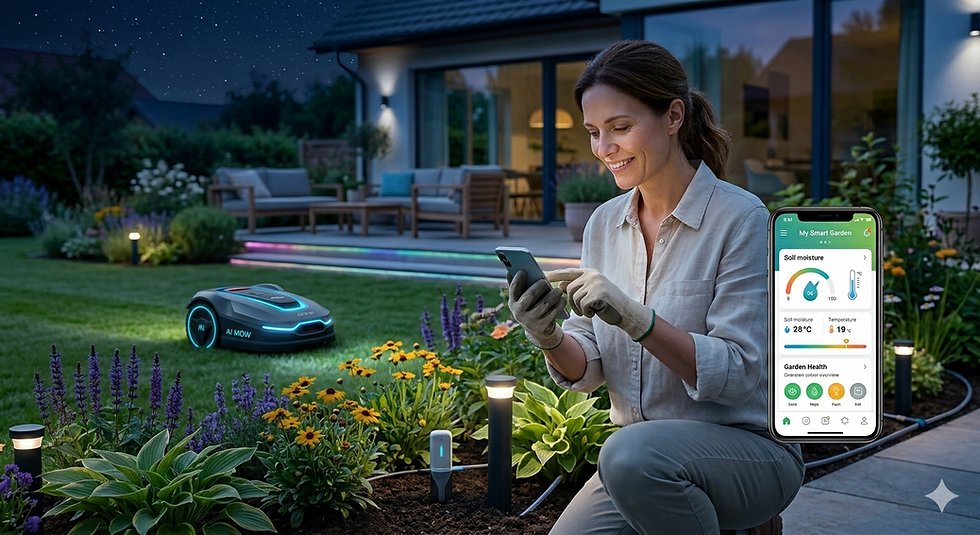
But fast forward to today. It’s 2026, and the "green thumb" isn't just something you're born with anymore; it's something you can download. Smart gardening 2026 isn't about robots taking over the soul of your backyard. It's about finally having a partner that understands what your soil is whispering. We’ve all been there, wondering if we’re overwatering or if that weird spot on the rose bush is a death sentence. Now, we finally have answers.
Why Your Backyard Feels Like a Full-Time Job
Maintaining a beautiful outdoor space is a lot like raising a pet that can’t make noise. It has needs, but it can’t tell you it’s thirsty until it’s already wilting. This is where AI gardening tools have stepped in to bridge the gap.
The Mystery of the Dying Hydrangea
We’ve all bought that one beautiful plant, tucked it into the ground with love, and watched it turn brown within a week. It feels like a personal failure, doesn't it? You feel like you just can't get it right. Why it happens: Most of the time, it’s a simple case of "right plant, wrong spot." You might think it’s a sunny spot, but the AI sensors we use now show that the shadows from your neighbor's fence are longer than you realized. The soil might be holding too much clay, literally suffocating the roots. Without data, you’re just guessing.
The "Guesswork" Irrigation Nightmare
Ever woken up at 3:00 AM because you realized you left the sprinkler on? Or worse, have you seen your "automatic" timer spraying the driveway in the middle of a torrential downpour? It feels like throwing money down the drain. Why it happens: Standard timers are "dumb." They follow a clock, not the clouds. Automated gardening technology in 2026 now checks local weather satellites and soil probes before it even thinks about turning a valve. It knows if it rained two miles away and adjusts accordingly.
The Battle Against Invisible Pests
You see a leaf with a hole in it. Is it a slug? A beetle? A fungus? You head to the store and buy three different sprays, hoping one works. It’s expensive, and honestly, it feels a bit like a science experiment gone wrong in your own backyard. Why it happens: By the time we see the damage, the "infestation" is usually well underway. We're reacting to the symptoms rather than the cause. Modern AI cameras can now spot the microscopic signatures of fungus or the early movement of pests before your human eyes even notice a nibble.
The Soil pH Rollercoaster
You read online that blueberries love acid. You dump some coffee grounds or sulfur back there, and suddenly the plant looks even worse. It’s confusing, and it makes you want to just pave the whole thing over with concrete. Why it happens: Soil chemistry is a delicate dance. Adding "stuff" without knowing your baseline is like adding salt to a soup without tasting it first. In 2026, we have instant-read probes that tell you exactly what’s missing, be it nitrogen, potassium, or just a little bit of breathing room.
The Rise of the Intelligent Landscape
When we talk about the future of gardening AI, we aren't just talking about gadgets. We’re talking about a shift in how we manage gardening and landscaping as a whole. It’s about working smarter, not harder, so you can actually enjoy your patio instead of just staring at it as a "to-do" list.
Lawns That Grow Too Fast (Or Not at All)
Mowing the lawn is the ultimate weekend chore. It’s loud, it’s hot, and as soon as you finish, it feels like it grows back an inch by Monday. It’s an endless cycle that eats up your family time. Why it happens: Grass grows unevenly because of localized "micro-climates" in your yard. Some spots get more runoff; others get more sun. AI-driven residential lawn and garden maintenance now uses precision mowing robots that don't just cut, they analyze growth patterns and only trim the areas that actually need it, keeping the grass at a perfect, healthy height 24/7.
The "Overgrown Jungle" Syndrome
You skip two weeks of pruning, and suddenly your walkway is a gauntlet of thorny branches. It feels like the garden is actively trying to reclaim your house. It’s overwhelming to even know where to start cutting. Why it happens: Plants have "growth spurts" tied to specific temperature and humidity triggers. If you aren't tracking those, you're always playing catch-up. AI apps can now send you a "Prune This Week" alert based on the exact growth stage of your specific hedge species.
The Complexity of Strata Gardening
If you live in a complex or manage a property, you know the headache of Strata Gardening. One resident wants flowers, another complains about the noise of the blowers, and the budget is always tight. It’s a political minefield. Why it happens: Traditional landscaping for large complexes is often "one size fits all." It’s inefficient. In 2026, we use AI to map out high-traffic areas vs. quiet zones, allowing for professional cleaning and gardening services to be deployed only where and when they are truly needed, saving everyone a lot of stress (and money).
The "Black Hole" of Gardening Costs
You go to the nursery for "just a few things" and come out $300 lighter. Half of those plants end up dying because they weren't right for your gardening needs. It feels like a hobby that just drains your bank account without giving much back. Why it happens: We often buy based on what looks pretty in the store, not what will survive in our specific micro-climate. AI-powered shopping assistants now let you scan a plant in the store and instantly tell you, based on your home's sensor data, exactly where it should be planted and what its survival odds are.
Merging Cleaning and Cultivation
One thing people often forget is that a garden isn't just plants. It’s the patio, the gutters, the paths, and the fences. This is where gardening and cleaning services have really evolved. A smart garden in 2026 is a clean garden.
The Algae-Slick Patio Problem
After a rainy week, your beautiful stone path becomes a slip-and-slide of green slime. It’s dangerous and looks messy. Scrubbing it by hand is a back-breaking task that no one wants to do on a Sunday. Why it happens: Poor drainage and lingering moisture create the perfect breeding ground for algae. It's a sign that your landscape's "flow" is off. Smart drainage sensors can now alert you when water is pooling in hidden spots, allowing you to fix the issue before the slime (or the mold) takes over.
Gutters That Overflow and Ruin the Beds
You spent all day planting petunias under the eaves, only for a rainstorm to turn your gutters into waterfalls that wash all the mulch away. It’s heartbreaking to see your hard work literally washed down the driveway. Why it happens: We usually only think about gutters when they're failing. AI-integrated cameras (often the same ones watching for pests) can now "see" the debris buildup in your gutters and ping your phone before the first drop of rain even falls.
The "Cloudy Pool" and Runoff Dilemma
If you have a pool, you know that a messy garden leads to a messy filter. Grass clippings, leaves, and dirt always seem to find their way in. It’s a constant battle between your landscaping and your cleaning routine. Why it happens: This is usually a layout issue. In 2026, AI design software can simulate wind patterns and water runoff in your specific yard, showing you exactly where to plant "buffer" shrubs to catch debris before it hits the water.
The Mulch Migration
You lay down fresh mulch, and three days later, it’s all over your sidewalk. It looks "unkept," no matter how much you sweep. You feel like you're constantly cleaning up after your own garden. Why it happens: This is often caused by birds or improper grading. AI monitors can actually identify if local wildlife is the culprit, suggesting specific, harmless deterrents (like ultrasonic frequencies) to keep the mulch in the beds and off your shoes.
Solutions You Can Try
If all of this sounds like science fiction, I promise you, it’s more accessible than you think. You don't need a degree in robotics to start using smart gardening 2026 principles today. Here are a few ways to get started:
Start with a Smart Soil Sensor: This is the "entry drug" for smart gardening. Buy a simple Bluetooth or Wi-Fi soil probe. Stick it in your most "difficult" spot. Leave it there for a week. You’ll be amazed to see the data—maybe that spot stays wet for three days after a rain, which is why your lavender keeps dying. Knowledge is power!
Audit Your Watering with an App: Check your local weather app’s "Evapotranspiration" (ET) rate. It sounds fancy, but it just tells you how much water is actually leaving the soil. If the ET is low, skip the watering, even if the dirt looks dry on top.
Use AI Identification for "Problem" Leaves: Next time you see a spot on a leaf, don't guess. Use a free AI plant ID app. Take a clear photo of the underside of the leaf. These apps are incredibly accurate now and will often tell you if it's a watering issue or a specific pest.
Group Plants by "Data Needs": If your sensor says one corner of the yard is always dry, move all your drought-tolerant plants there. We call this "hydro-zoning." It’s the easiest way to make automated gardening technology work for you—you water the whole zone the same way because the plants all want the same thing.
Hire a Pro for a "Smart Tech" Consultation: Sometimes you just need a human eye. Ask your residential lawn and garden maintenance provider if they offer a tech audit. They can help you set up your zones so you aren't wasting money on water or fertilizers you don't need.
Embracing the Future (Without Losing the Dirt)
I know what some of you are thinking. "But I like getting my hands dirty! I don't want a computer telling me how to love my garden."
I get it. Truly. There is a peace in the garden that you can't find anywhere else. The smell of fresh earth, the sound of the wind through the leaves... it's therapy.
But here’s the thing: Smart gardening 2026 isn't about replacing that feeling. It’s about removing the stress that gets in the way of it. It’s about not having to worry if your plants are suffering while you’re at work. It’s about having a garden that thrives so you can spend your time enjoying the view instead of constantly fixing it.
You're not alone in feeling overwhelmed by the yard. It's a living, breathing thing that changes every day. But with a little bit of AI help and a lot of heart, you can turn that "chore" back into a sanctuary. And hey, if it gets to be too much, if the weeds are winning or the tech feels a bit too heavy, don't be afraid to call in the experts. Even in 2026, nothing beats the hands of a professional who knows exactly what your soil needs.
Take it one plant at a time. You've got this.
GoGardening Experts — Always here when your landscape needs a little extra care.


Comments